
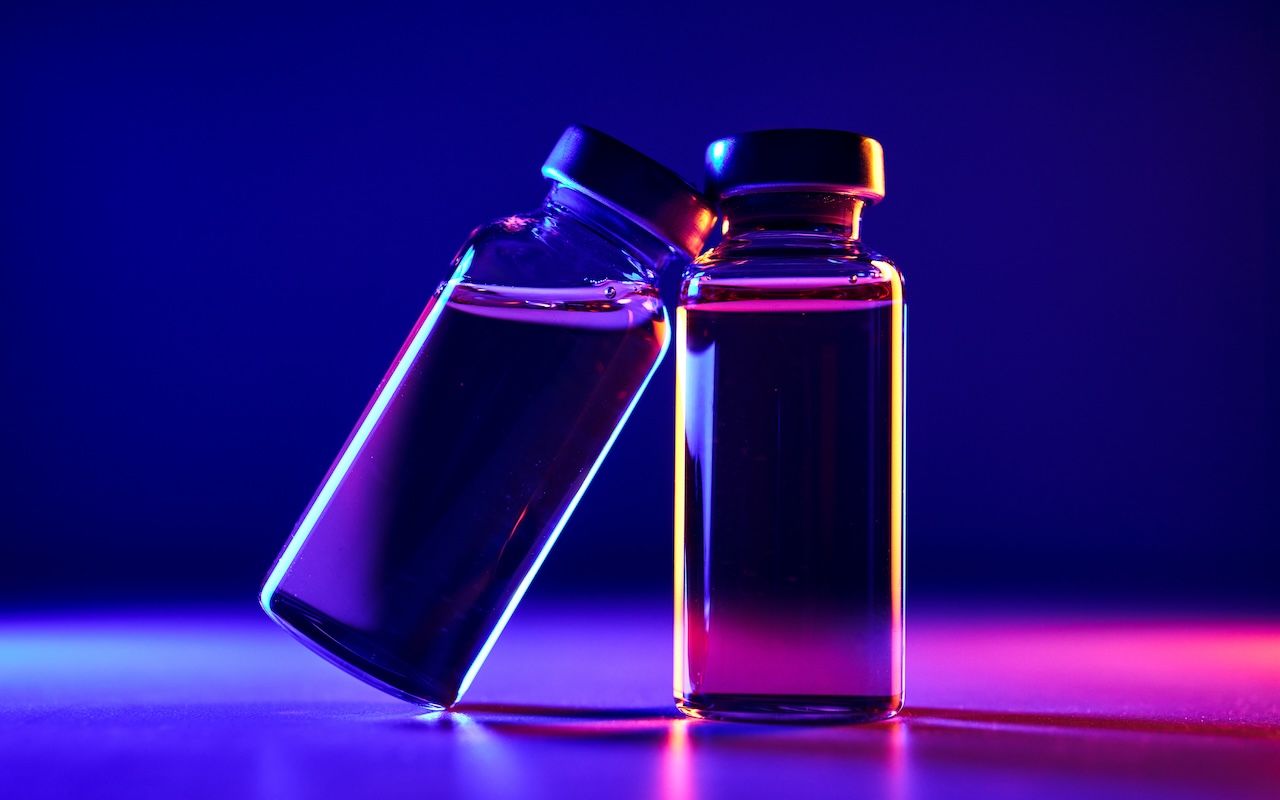
In empirical research, experimental reproducibility depends heavily on compound stability. While synthetic peptides offer high target specificity, their molecular integrity is sensitive to ambient conditions, temperature fluctuations, and liquid handling.
Understanding the chemical mechanisms of peptide degradation — and the thermodynamics of reconstituted solutions — is essential for preserving sequence structure throughout testing protocols.
The Molecular Vulnerability of Peptide Chains
Peptides consist of amino acid residues linked by covalent amide bonds (peptide bonds). While the primary backbone is structurally robust, secondary and tertiary conformations depend on weaker interactions, including hydrogen bonding, electrostatic forces, and hydrophobic interactions.
When exposed to adverse conditions, peptides degrade primarily through two pathways:
Chemical Degradation (Bond Alteration)
Deamidation: The spontaneous hydrolytic cleavage of amide functional groups, primarily affecting Asparagine (Asn) and Glutamine (Gln) residues. This alters the overall charge profile of the molecule.
Oxidation: Reaction with dissolved oxygen or reactive species, targeting sulfur-containing amino acids such as Methionine (Met) and Cysteine (Cys).
Hydrolysis: Water-mediated cleavage of the peptide backbone, accelerated by non-neutral pH conditions or elevated temperatures.
Physical Degradation (Conformational Loss)
Aggregation: Unfolded or partially denatured peptide chains exposed to shear stress or hydrophobic surfaces can clump together, forming insoluble aggregates that reduce available active concentration.
The Role of Lyophilization (Freeze-Drying)
To prevent premature hydrolysis and chemical reaction pathways, analytical peptides are processed via lyophilization (freeze-drying).
This process removes water through sublimation under a deep vacuum: Solid Ice converts directly to Water Vapor under controlled vacuum and thermal energy.
By eliminating unbound aqueous solvent, the peptide is locked into a stable crystalline cake. In this dry, solid state, chemical degradation rates drop significantly, allowing for extended shelf-life under controlled cold storage (-20 degrees C to 8 degrees C).
Mechanics of Reconstitution and Solution Dynamics
Once a lyophilized peptide is reconstituted with a liquid diluent — such as sterile Bacteriostatic Water (0.9% Benzyl Alcohol) — the liquid state reactivates thermodynamic mobility.
To preserve peak analytical purity post-reconstitution, specific handling parameters must be maintained:
Shear Force Minimization: Direct high-velocity liquid stream impingement onto the lyophilized cake can cause mechanical shearing and localized structural aggregation. Diluents should be introduced gently along the inner glass wall of the vial to allow passive dissolution.
Temperature Maintenance: Elevated room temperatures drastically accelerate hydrolysis and oxidation rates. Once reconstituted, solutions should be kept refrigerated at 2 to 8 degrees C.
Freeze-Thaw Prevention: Repeated freeze-thaw cycles subject the peptide backbone to mechanical stress from ice crystal formation, leading to severe aggregation and precipitation.
Summary Checklist for Sample Integrity
Dry Storage: Keep lyophilized vials protected from light exposure in sealed, desiccated environments at 2 to 8 degrees C (short term) or -20 degrees C (long term).
Reconstitution Handling: Allow the vial to reach room temperature prior to diluent addition to prevent condensation buildup on the internal cake.
Aqueous Management: Store reconstituted aliquots strictly at refrigerated temperatures, avoiding unnecessary freeze-thaw events.
At Axova Research, our synthesis lots undergo rigorous analytical evaluation — ensuring that every vial provides consistent structural stability and verified sequence purity for your experimental models.
Axova Research supplies reference peptides to verified laboratories for research purposes only. Because you did not confirm you are 21 years of age or older and agree to our terms, access is not permitted.